
2019 - Kennet & Avon Canal and its bridges
The canal was planned around 1793, and the Wilcot section had been built by 1810.
It runs roughly east-west, cutting just to the north of Wilcot Green. There it is bridged by Wilcot Bridge:
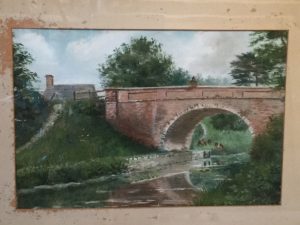
To the west is Bowdens Bridge:
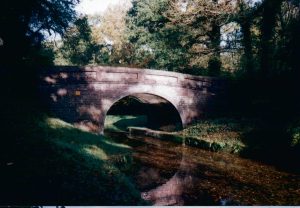
To the east is Bristows Bridge:
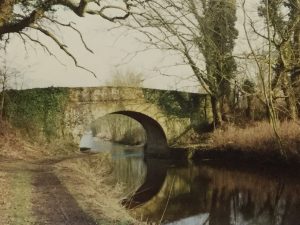
Shown here by kind permission of Wiltshire Museum, Devizes
A suspension bridge was constructed in 1845 beside Cannings Cottage for foot traffic; it is on a novel design by James Dredge of which few other examples survive.
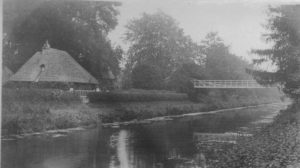
Beyond Bowdens Bridge is Wide Water and the stately Ladies Bridge, both constructed by John Rennie on the stipulation of Susannah Wroughton.
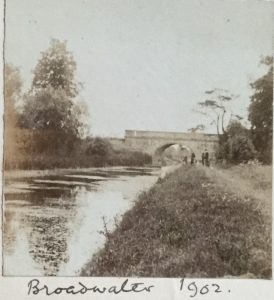
The canal was a working transport and industrial artery:
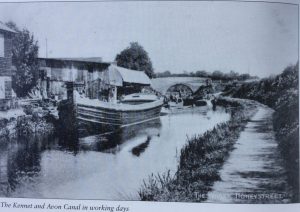
The canal at Honeystreet in its working days
But the canal had been bought up by the railway companies in the mid-19th century, and its use declined. Children might swim in it, but it was no longer a key transport artery, and it became silted and overgrown.
It found a new use in 1940 as part of the ‘GHQ Blue line’. This was part of Britain’s defensive lines, designed to protect London and the strategic and industrial centres from the threat of invasion – or at least to slow up any enemy advance. Pillboxes were placed along the canal. Many are still visible in the area round Wilcot.
More recently the canal has been restored for leisure use.